Which of the Following Exemplify Expressive Aspects of Art?
How do we estimate the value of the work of art? And, no, nosotros are not talking nigh its price on the market. I of the oldest answers to that question is that we judge information technology by its form, by those structural elements that are always discernible to the eye - that which we call formalism in art. This arroyo to deciphering artwork gave birth to art scientific discipline, art criticism, every bit well every bit a specific way of creating art by focusing on its visual, aesthetic quality.
The route to understanding what formalism in art really is about takes us from philosophical ideas of Plato, Aristotle and Immanuel Kant, through the experiments of the avant-garde, all the way to contemporary platonic of socially-engaged and conceptual art.
At the same fourth dimension, at its heart, formalism holds that one question which stands higher up all others - what is art? How tin we know when we are standing in the presence of something truly magnificent? Is there a universal way to make up one's mind the quality of whatever unmarried work and use it to recreate the sublime?
Many believed that there is. They postulated that artistic excellence tin can be institute in the structure of its elements, that it can exist dissected and measured, like with all good science, but more chiefly, that it unveils the very essence of human creativity.
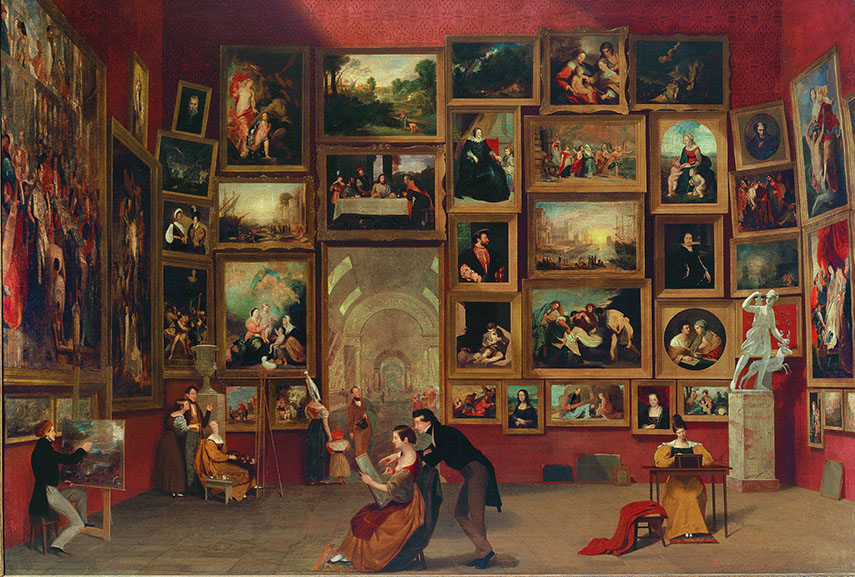
L'art pour l'art - What is Formalism in Art?
Then, what are those compositional elements formalism places at the front? Or, better withal, what is not formalism? Every fourth dimension you stopped to appreciate the ultimate irony of Gustav Klimt'southward Death and Life (1908-16) or profound social commentary of Banksy'south Rage Flower Thrower (2003), according to formalism doctrine you lot are missing the point. Everything in the work of art which is related to symbolism, context of any kind and iconography can merely be secondary to what constitutes its grade - line, shape, color, brushwork. Why is this so important? First, these are the elements that all artwork ultimately share, and so the but elements which can provide a basis for understanding art in general. And secondly, putting these elements in focus ways that art tin can become an democratic sphere of homo creation - L'art pour l'art.
"Fifty'art pour 50'art without purpose, for all purpose perverts art." - Benjamin Abiding, 1804
Fifty'art pour l'artis perhaps i of the near famous lines in all of art history and information technology is closely related to formalist move. Meaning art for art'southward sake, it was an idea that went perfectly in mitt with formalist view of value of fine art. Fine art needs no purpose other than its intrinsic beauty. If value of art can only be found in its structural elements, so surly nothing outside those elements tin can present motive for creating fine art. These ideas of form at the center of artistic creation had different manifestations in different art movements. For Romantics, form was where you search for art'due south essence; For Symbolists and Impressionists, it was its superior ability to convey artist intention; For Abstract Expressionists, it was the raison d'être - for meaning in art, i should await no further than the course.
The Definition of Formalism in Art
History of Formalism - The Question of Aesthetics
Plato was the first thinker to innovate the concept of grade. For him, form or appearance, was that 1 element shared by both tangible and abstract phenomena in the world. His ideas framed how we empathize human perception, why is a portrait or a shadow equally important to united states as the existent thing. Plato's theories were the footing for birthing the aesthetic bailiwick - the study of beautiful. Aristotle believed that catharsis in art tin can only be achieved if the work is dominated by its structure. Immanuel Kant, on the other paw, was more concerned with universality. His philosophical quests for universal truth lead him to conclude that but form of an art object tin can be judged as past different people, equally leading to pleasure. For what kind of world information technology is we alive in, if we all meet things differently, if there'southward no objective noesis? From Kant we inherited that idea of form as shape, which will later lead to assay of what today we call style. It was through reading of Kant that aesthetics of art, and art criticism with it, was gradually formulated past Eduard Hanslick (1891), Clive Bell (1913) and Roger Fry (1920).
As an thought, formalism reached its pinnacle in the period of high modernism, between the last decades of the 19th and outset one-half of the 20th century. This is not surprising if we recall that first works of abstract art appeared during this menstruum. Non-representational art brought this new way of expression where often nada is discernible except its structure, inspired greatly by evolution of artful thinking on the expressiveness of form. Works of Piet Mondrian and Jackson Pollock, together with their thinking about art, pushed an American art critic Clement Greenberg (1960) to fortify this formal approach for analyzing modernistic art merely through those elements used to create information technology.
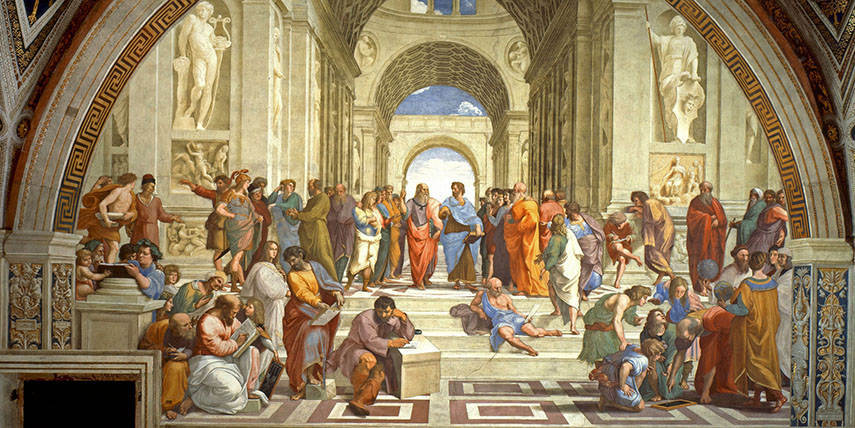
Philosophy of Ceremonial - Form in Literature and Music
A large part of philosophy of ceremonial is related to 19th century striving for scientific truth. People then believed that in art, like in physics or architecture, nosotros need to learn to recognize formalistic aspects of the work in club to study fine art equally a scientific discipline. Such discipline would study how art is made in gild to understand what it is we are looking at. Formalism is the reason why today we tin can enroll into Literary Theory, Musicology and Fine art History programs and courses at universities. It is the reason why there are still people effectually who are trained to trace dorsum every brushstroke of Mona Lisa. This philosophy, governed by 19th century logical thinking, enabled us to understand the syntax in a literary masterpiece, succession of chords in an orchestral symphony, every breath in actor'due south performance. Formalism brought discourse of color, texture, rhythm, composition and flow into the world, concepts we all use when we try to depict the cute.
Formalism was an attempt on philosophical inquiry into the very nature of art, and as such was one approach among many others, similar Voluntarism, Intellectualism and Naturalism. Only, it took all of the arts with a tempest. Formalism was particularly strong in music. It positioned music itself as above history, composers and even text which is oft present in vocal works. Information technology was much easier to celebrate the brainchild in music than it was with the other arts, but also to diminish the value of anything outside the work itself. In literature, formalism meant focusing on exploring the meaning of a literary piece of work merely from what we can experience while reading it, and and so only considering those elements inherent in the text - grammar, syntax, tropes etc...
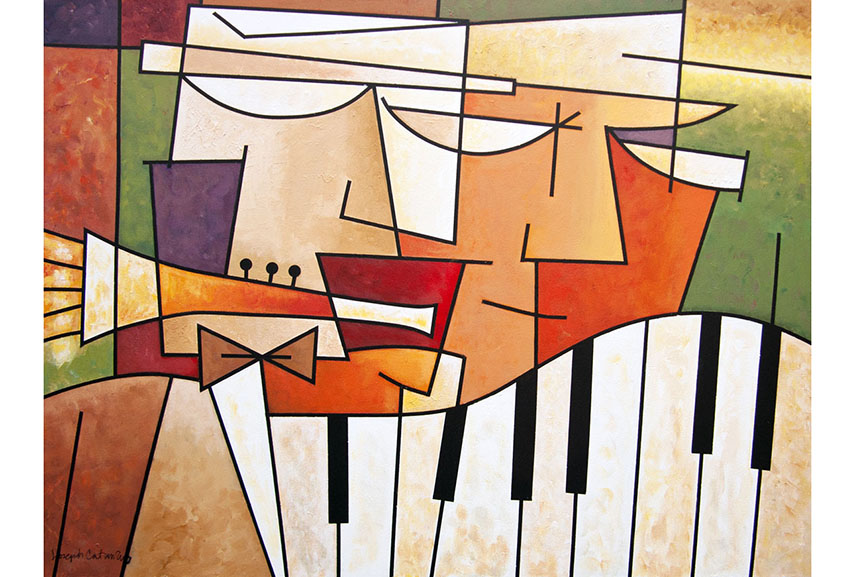
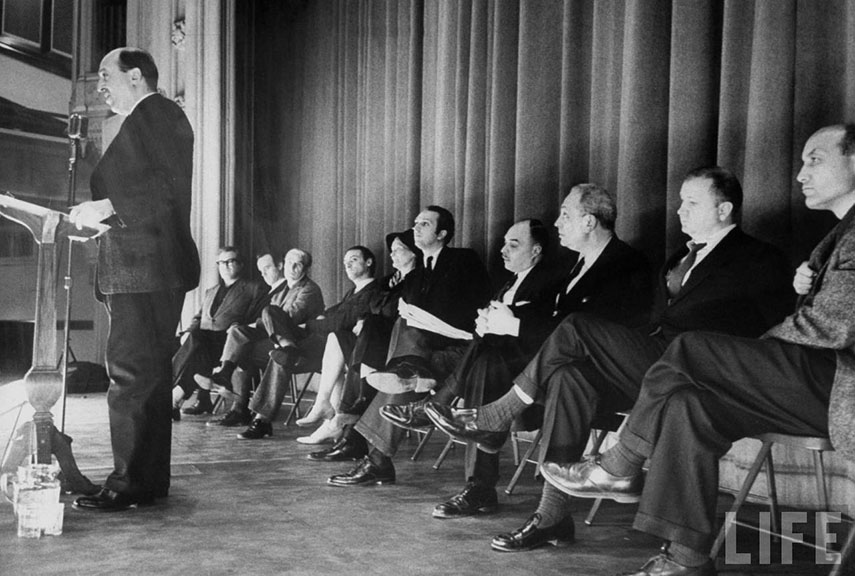
The Art Critics: Clive Bell and Clement Greenberg
One of the most important figures in formalism was Bloomsbury author and art criticClive Bell. His 1914 book Art was kickoff attempt to define the class in visual art which he did through his notion of significant form. Reflecting the L'art pour l'artcredo, his goal was to give irrefutable proof that art form is different than what nosotros find in all other objects. Bell believed that emotions we feel when looking at an artwork are incited by its formal quality and not its subject matter, sensation he chosen the aesthetic emotion. Significant form is actually a combination of formal elements, primarily lines and colors which Clive Bong thought are edifice blocks of all visual art.
Post-obit Bong'due south influential ideas, it was American critic Clement Greenberg who proved to be the strongest advocate of formalism and modernistic art inspired with it. Information technology not for his striving to formulate the expressive elements in non-representational art, it is questionable whether works of Pablo Picasso, Clyfford Still, Marking Rothko and other Abstract Expressionist artists would be and so quickly accepted in the U.S. art community. For Greenberg, the rejection of representation by abstruse artists was a natural development of visual art. The manipulation of form was the rex of artistic expression.
The Formal Analysis of a Painting - What Constitutes the Form
As pertaining to the meaning of the word "ceremonial", the formal assay of the work of art refers to description of purely visual elements. The Formal analysis role is to locate all the elements of art'south form and explain their arrangement - the work'southward composition. Then, what are those elements? Explanations which can exist found differ in number, merely all agree on the most important: line , color , shape, space and texture .
When we attempt to describe the line, we ask ourselves is it straight, curved, flowing, and thick or thin, horizontal or vertical. Shape and space correspond the relationship of objects in the painting and space behind them. The main question is whether the shape is geometric or organic, how many shapes are used to produce the desired image? In what dimension, form of space, are they placed? Colour is, likewise the line, the almost important element of a painting. Nosotros depict the colour through concepts of hue (reddish, blue, yellow etc.), value (effulgence), intensity (purity), saturation, delineating between primary and secondary colors and considering their complementarities. Texture is that last piece of the puzzle which gives united states of america the idea of surface quality of an object. Is information technology silk the homo on the portrait is wearing? What would the object feel like if we could touch it? In lodge to make a successful analysis we must ask that most important question - What is the composition of the painting? It is the commonage trip the light fantastic toe of all of these elements that constitutes the significant form, that which provides its expressiveness.
Formalist Fine art - Creating the Absolute
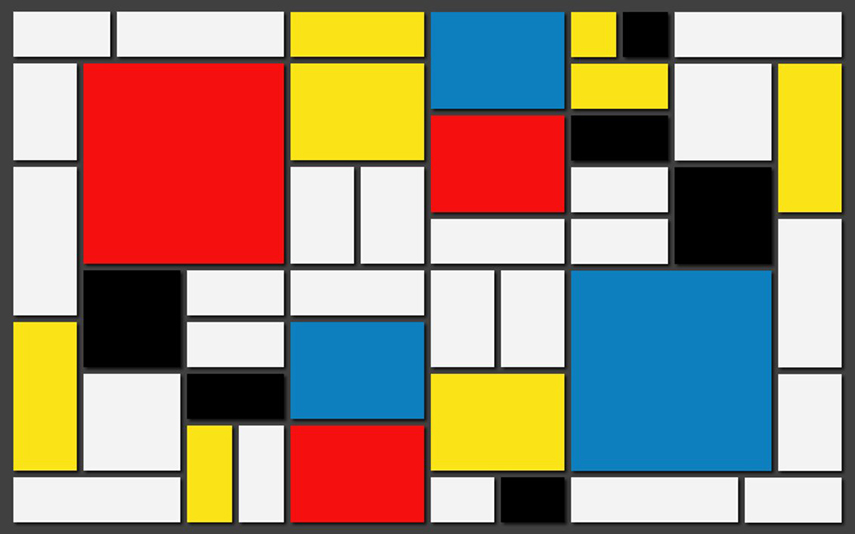
The works of art that we could dub every bit formalist already accomplished fame past other names - modern fine art, abstruse art, the avant-garde, yet they here are presented in the context of their philosophical origin. After all, Clement Greenberg's famous essay Modernist Painting (1960) uses works of Jackson Pollock as The example of formalism. Greenberg saw Pollock's style as maybe the greatest example of that manipulation of pure form. Only perhaps, the best example of formalist art would be compositions of Piet Mondrian similar his Composition with Yellow, Blue, and Ruddy (1937-42). Working with uncomplicated geometrical lines and primary colors, his paintings are the purest manifestation of that which Clive Bell considered significant form. Formalist approach to music, which produced the concept of absolute art, as unattached to annihilation outside itself, was a not bad inspiration for abstruse artists who strived to achieve this lack of referentiality.
Even though formalism stared in many other arts, it was the painting that both Bell and Greenberg had in mind while formulating their theories. Great works of formalist art were produced past Expressionism, Cubism, Geometrical Abstract Art, Post-Painterly Brainchild, and Breezy Fine art past artists like Wassily Kandinsky, Kasimir Malewitsch, Hans Hofmann, Robert Motherwell, Jean Dubuffet and many others. Just this purified painterly approach to course likewise inspired artists in other media and continues to exercise so today: Hans Richter and Viking Eggeling and their Abstract films, Minimalism of Yves Klein and Frank Stella, Vsevolod Yemilyevich Meyerhold's Formalist theatre, Land art etc.
Welcome to the Age of Post-formalism
Like with all expert social theories, there is usually more criticism involved, than the actual content discussing the theory. Anti-formalism opinions appeared virtually instantly after starting time attempts of canonization. Questions enervating more detailed description of the form, disputes over the historical function of art and what constitutes its value continue to inflame art critics and historians. But the biggest challenge to formalism came with Postmodernism and Conceptual art. Works of artists like Marcel Duchamp and Andy Warhol brought the question of concept in play when nobody could've guessed that it would come to rule contemporary art. Postmodernism on the other manus introduced that hard disquisitional reflection into the inner workings of the art world, violent down all big narratives and search for universal truth. But in 2017, we live in a truly Post world, where Postmodernism is also something we had to overcome, leading u.s.a. to a whole new appreciation of the form.
Written by Vera Mevorah .
References:
All images used for illustrative purposes only.
Source: https://www.widewalls.ch/magazine/formalism-in-art
0 Response to "Which of the Following Exemplify Expressive Aspects of Art?"
ارسال یک نظر